Oden Southern Ocean

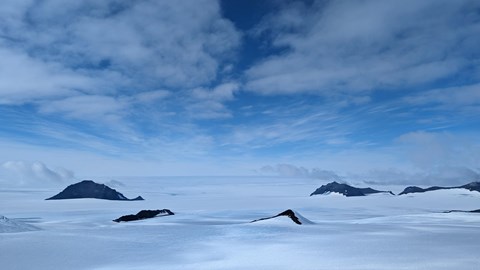
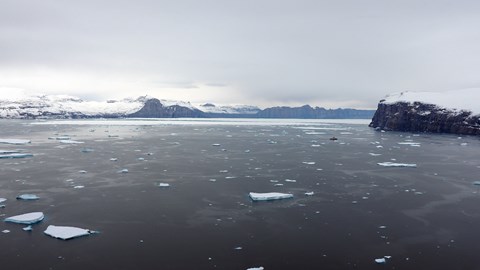
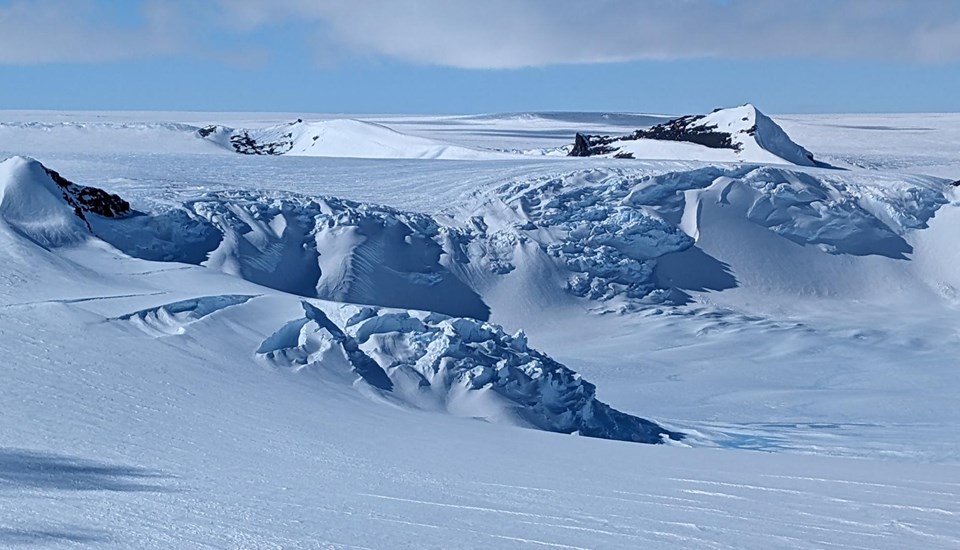
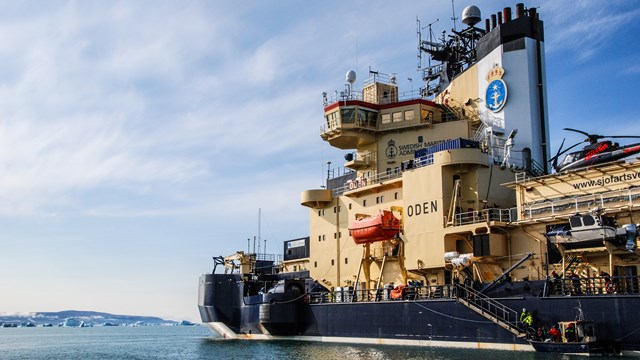
This year’s expedition, the fifth such, is being conducted as a unique joint effort involving the American vessel Nathaniel B. Palmer and the Swedish icebreaker Oden. Researchers will now have greater opportunity to study the Amundsen Sea; one of the least-known areas in Antarctica.

Inaccessible locations

Nathaniel B. Palmer and Oden will leave from the port of Punta Arenas, Chile, two weeks apart at the end of November. The research activities on board the American vessel will begin west of the Antarctic Peninsula, while Oden will head for a planned rendezvous point at the outer edge of the Amundsen Sea. This sea is one of the least researched areas in Antarctica, and little is known about its general oceanography, biological productivity, food-web structures, or marine biogeochemistry. The ships will rendezvous and exchange researchers and equipment. Nathaniel B. Palmer will then continue to study the open area between land and sea ice, the polynya – an extremely interesting area to examine so early in the research season, when biological activity is at its peak. Oden will work mainly in ice-covered water. Once the expedition reaches the Ross Sea, which the researchers know more about, sampling will become more opportunistic and focus on expanding existing measurement series.

Icebreaking mission

The vessels will cooperate on both navigation and research as they sail towards the American McMurdo Research Station, where the expedition will conclude. A helicopter will be on board Oden for both navigational and research purposes. Once the expedition ends, Oden will set off to break an ice channel in McMurdo Sound on behalf of the National Science Foundation. This mission will make it possible to travel to and from the American station by boat during the research season.

Swedish research projects

The research to be conducted during Oden Southern Ocean is trans-disciplinary, touching on subjects ranging from long-lived pollutants and greenhouse gases, epidemiology, and microbial ecology to oceanography and the physics of ocean ice. Many of the projects will focus on the effects of climate change.

Oden

Inter-Related Biogeochemical Cycles of Halocarbons and Mercury in the Southern Ocean

Katarina Abrahamsson, Department of Chemistry, University of Gothenburg

Circulation of Warm Oceanic Water and Glacier Melt Water in the Amundsen Sea–Ross Sea Shelf Region

Göran Björk, Department of Earth Sciences, University of Gothenburg

Dynamics and Evolution of Epidemic Diseases in Antarctic and Arctic Seals

Tero Härkönen, The Department of Contaminant Research, Swedish Museum of Natural History

Processes Driving the CO2 System in Sea Ice and Water in the Climatically Sensitive Amundsen and Ross Seas

Melissa Chierici, Department of Chemistry, University of Gothenburg

Nathaniel B. Palmer

Iodine Isotopes (129I and 127I) and Species (I- and IO3-) as Ultra Sensitive Tracers of Ocean Circulation

Ala Aldahan, Department of Earth Sciences, Uppsala University

Patchiness and Significance of Microbial Communities Controlling the Southern Ocean Carbon Cycle

Stefan Bertilsson, Department of Ecology and Evolution, Uppsala University

Climate Change and Predatory Invasion of the Antarctic Marine Environment

Per-Olav Moksnes, Department of Marine Ecology, University of Gothenburg

Iron Speciation and Lead in Amundsen Sea: Study of the Relative Importance of Sea and Glacial Ice Sources

Kuria Ndungu, Department of Applied Environmental Science (ITM), Stockholm University

Schedule

25 October: Oden departs Sweden

26 November: Nathaniel B. Palmer departs Punta Arenas

5 December: Oden to Punta Arenas

8 December: Oden departs Punta Arenas

18 December (preliminary): Nathaniel B. Palmer and Oden rendezvous

14 January (preliminary): Oden to McMurdo Station

15 January: Participants from Oden fly from McMurdo to Christchurch, New Zealand

16 January: Nathaniel B. Palmer to McMurdo Station

17 January: Participants from Nathaniel B. Palmer fly from McMurdo to Christchurch

Editor: Webmaster Last updated: 2011-09-19