IceCube

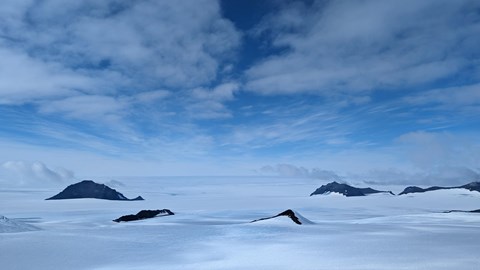
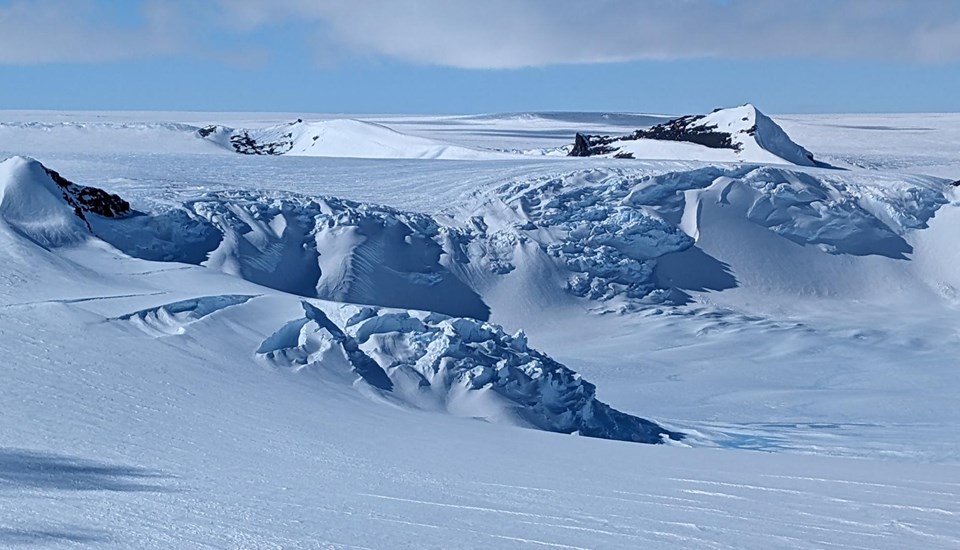
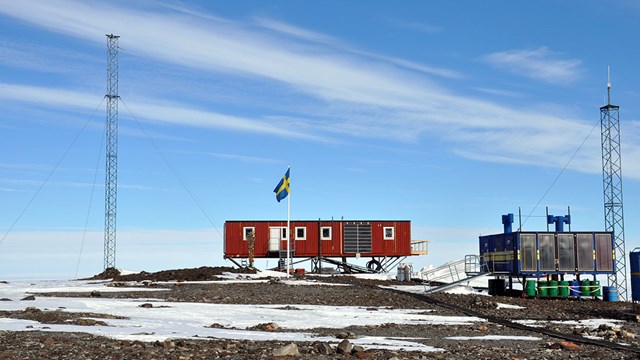
The final season for completing the IceCube neutrino telescope, one cubic kilometre in size, will soon begin at the Amundsen–Scott Station at the South Pole. Using hot water drills, two-kilometre-deep holes are being bored in the clear ice to house light detectors for capturing the weak light emitted when neutrinos collide with atoms. The construction of this gigantic structure in one of the world’s most extreme climates represents one of the biggest and most complex research projects in the world. The goal is to determine where cosmic radiation originates (near black holes?) and what the universe’s dark matter consists of. To accomplish this, researchers are using neutrinos, uncharged elementary particles of extremely low mass. Neutrinos form when particles collide out in space or in our atmosphere. They can also form when particles of dark matter collide inside the sun. Because of their neutral charge, neutrinos cannot be affected by the magnetic field in space, with the result that their direction of travel points back to their source (e.g., a black hole). They can pass through planets and other heavenly bodies without being stopped.

Summer at the South Pole lasts from November to February, when the temperatures are approximately -30 °C. During this time, the Amundsen–Scott Station will be manned by some 150 people, up to 48 of whom will be working on the IceCube Project simultaneously. At least ten countries, including Sweden, are involved in the project through the Swedish Polar Research Secretariat; the Swedish researchers come mainly from Stockholm and Uppsala universities.

Swedish research leader: Per Olof Hulth, Department of Physics, Stockholm University

Read more about the IceCube project (new window)

Editor: Webmaster Last updated: 2011-09-19